
Hyaluronic acid is one of the most popular components in cosmetics and aesthetic medicine. It's a natural ingredient that our body contains, mostly in the skin, but also in other areas such as the joints.
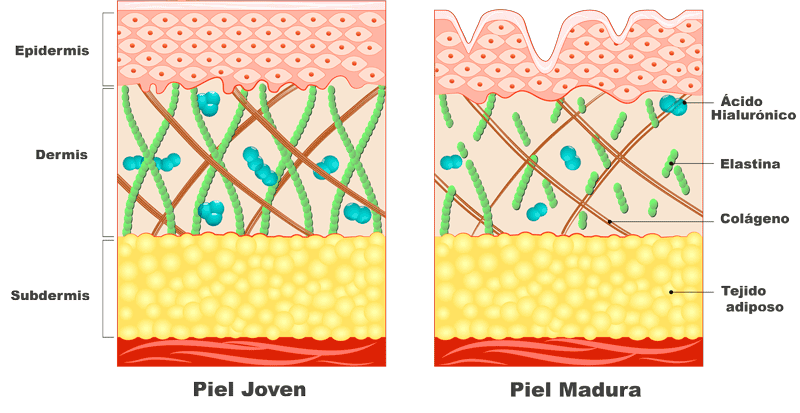
The bad news is that from the age of 25, our own production of hyaluronic acid begins to decline; little by little our skin becomes less firm, and with that, fine surface wrinkles begin to appear—which, by the way, are accelerated by external factors such as the sun, pollution, tobacco, etc.
The good news is that we've managed to replicate hyaluronic acid synthetically, and in different formats too, which let us include it in our beauty routines and protocols in a way suited to our age and needs.
What function does hyaluronic acid serve?
According to pharmacist and expert Gema Herrerías, as she explains in her "Definitive Guide to Skin Care", hyaluronic acid belongs to the family of "barrier-function repairers"; more specifically, hyaluronic acid is a humectant—what it does is increase the water content of our skin, which gives it a firm, hydrated appearance. What's more, if they help maintain the lipids of the stratum corneum, the skin's outermost layer, we'll manage to delay the appearance of the small wrinkles that initially show up due to dehydration.
The hyaluronic acid we have in our skin is produced by the fibroblasts; it passes into the dermis and, to a lesser extent, the epidermis, but most of it is found in the extracellular matrix. It's precisely this matrix that gives the skin its "support," so when our own production of hyaluronic acid and elastic fibers declines, the first fine wrinkles appear; lack of hydration is one of the main factors that trigger this more aged appearance.
Can skin aging be prevented?
Yes, with good lifestyle habits and a proper cosmetic regimen.

Hydration is a beauty essential; if we manage to maintain optimal hydration levels, we can delay the appearance of the signs of skin aging. Obviously, we can't forget facial cleansing and daily sun protection.
Are all hyaluronic acids the same?
No, hyaluronic acid is a highly hydrating molecule—it can retain up to 1,000 times its weight in water—but depending on what we need it for, this molecule has been synthesized in different molecular weights and cross-linkings.
As the expert Gema Herrerías explains in her book "The Definitive Guide to Skin Care", we can find different groups of hyaluronic acid according to their Molecular Weight. Here I'll detail the most commonly used in cosmetic formulas:
- High Molecular Weight: a molecule that barely penetrates the skin; it performs a "plumping" function on the most superficial wrinkles immediately. It also helps our skin avoid losing water and, with that, protects us from external aggressions, delaying the signs of aging.
- Medium Molecular Weight: a molecule that already has a certain power of penetration; through the stratum corneum, it will allow hydration from the deeper layers.
- Very Low Molecular Weight: this is a hydrolyzed hyaluronic acid, so it can penetrate the deeper layers of the skin, reducing sagging, wrinkles and dehydration; this hyaluronic acid will act on the extracellular matrix.
How do I include hyaluronic acid in my cosmetic beauty routine?
Now we know we have hyaluronic acids that penetrate and others that don't, so let me explain how to use each one and how it's best to combine them:
- Low-molecular-weight or micronized hyaluronic acid: it will penetrate the deeper layers of the skin and help us stimulate collagen and elastin, and with that it will improve the thickness of our extracellular matrix.
I recommend using a hyaluronic acid serum every morning; as a base, it'll help us hydrate the deeper layers of the skin, and they usually contain other ingredients that boost the effect.
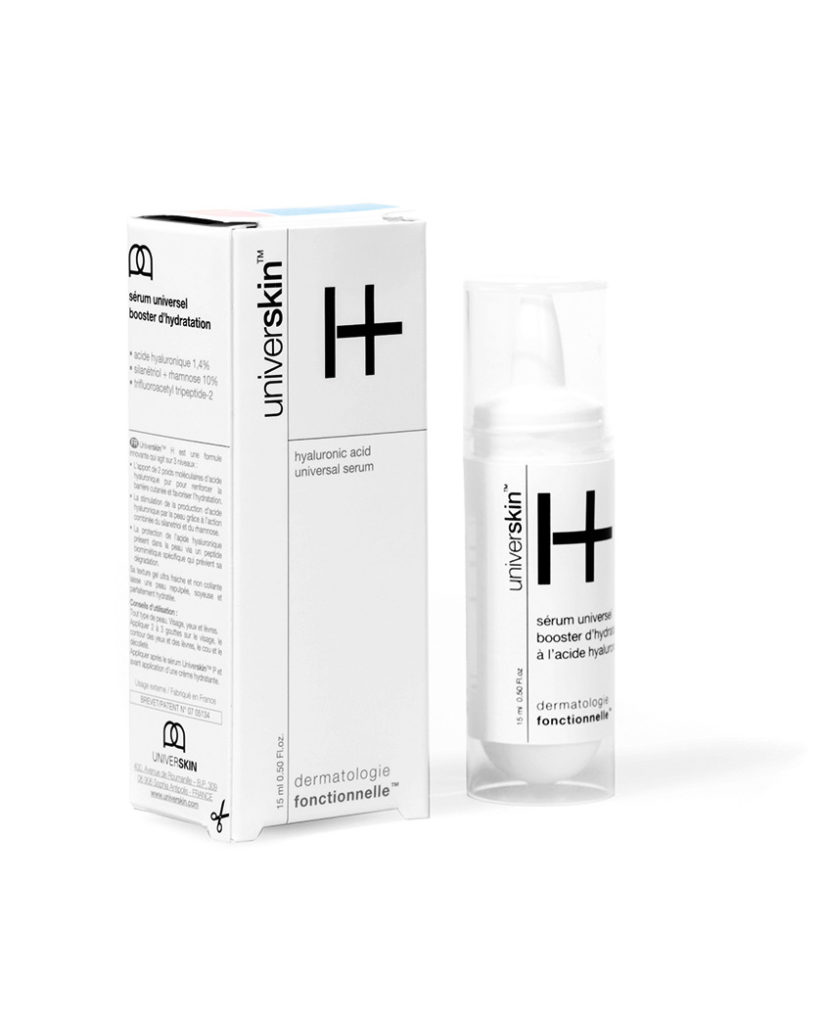
In the morning, my favorite is Universkin H, a very minimalist formula. This hyaluronic acid serum combines molecules of different molecular weights, so we'll manage to hydrate from within. It also includes Rhamnose, a sugar that gives us an immediate tightening effect; I recommend it for the mornings.
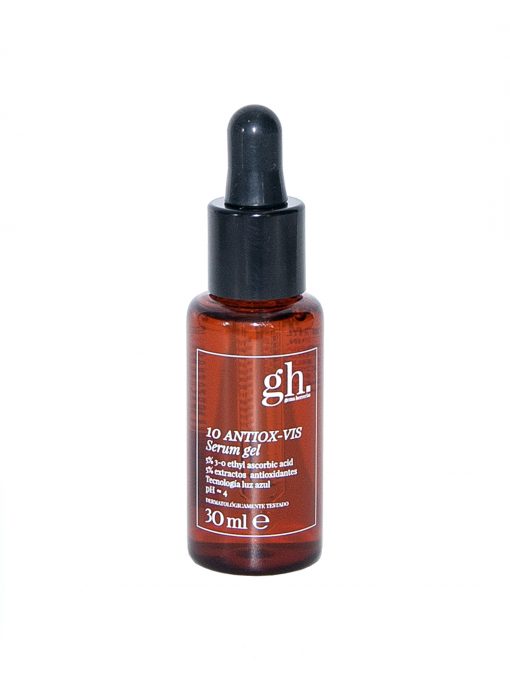
A curious fact: hyaluronic acid boosts the effect of Vitamin C, which, as you know, is a potent antioxidant and will give a lot of radiance to the skin. I recommend GH10 Antiox; it has an intensive effect—a few drops before the serum is enough.
So, is high-molecular-weight hyaluronic acid useless?
Of course it's useful—and a lot!
For example, if we apply a concentrated hyaluronic acid mask once a week, we'll achieve, on one hand, a flash effect—since the molecules immediately "plump" the wrinkles—and on the other hand, we're preventing our skin from losing water, which will improve long-term hydration, since the skin is denser, juicier, thanks to this immediate "plumping" effect; this video explains it very well.
Right now the cosmetic product with the highest plumping effect is the Pure HA liquid hyaluronic acid mask; it contains 1.8% pure hyaluronic acid and 2% glycerol. The incredible thing has been to be able to formulate this mask, since the molecules are so large that it was a cosmetic challenge—but they managed it, and the result is immediate: +20% hydration 15 minutes after application, and 46% if we use it for 4 weeks.
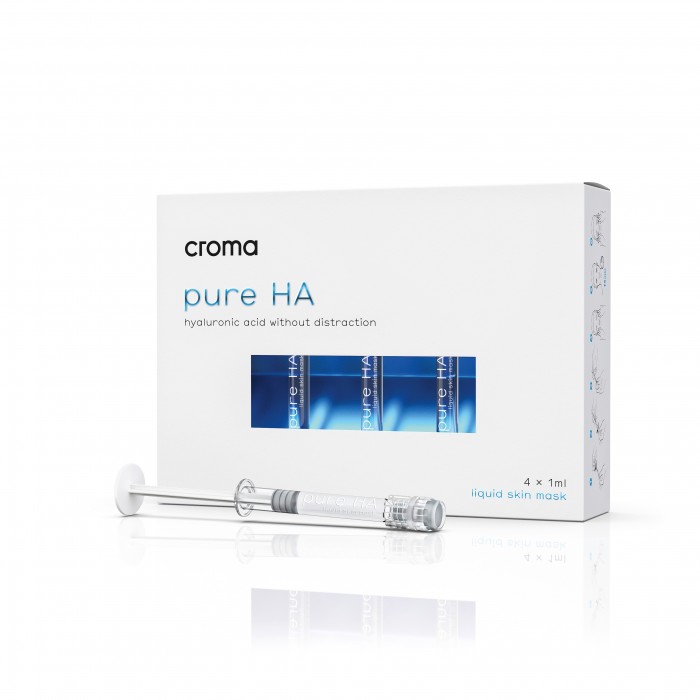
When do we apply it? Much better at night, since our skin is clean, we're relaxed and ready for bed, and at night cellular renewal takes place, so our skin will always be more receptive. In this case the effect will be immediate—after 15 minutes it's already worked and can be removed—but on very dehydrated skin we can leave it on all night.
You can also apply Universkin's H serum at night as part of your usual routine, combining it with the hyaluronic acid mask and a retinol serum.
Retinol is another star ingredient of the cosmetics industry; it's a derivative of Vitamin A, and the scientific evidence for it against the signs of aging is very extensive. It works by inhibiting metalloproteinases—nasty enzymes that destroy our collagen, which accelerates aging—well, the good news is that we can minimize their effect with retinol. Retinol can penetrate the skin through the stratum corneum.
On the market there are many retinol serums, at different concentrations. I'd recommend a low concentration so your skin adapts well and doesn't react; between 0.3% and 0.5% is very well tolerated.
How to apply it: I recommend starting twice a week at night, until your skin gets used to it; once some time has passed and your skin is accustomed, you can do one day of retinol and another of hyaluronic acid (serum or mask)—that would be the ideal combination.
My recommendation: GH 0.3% retinol
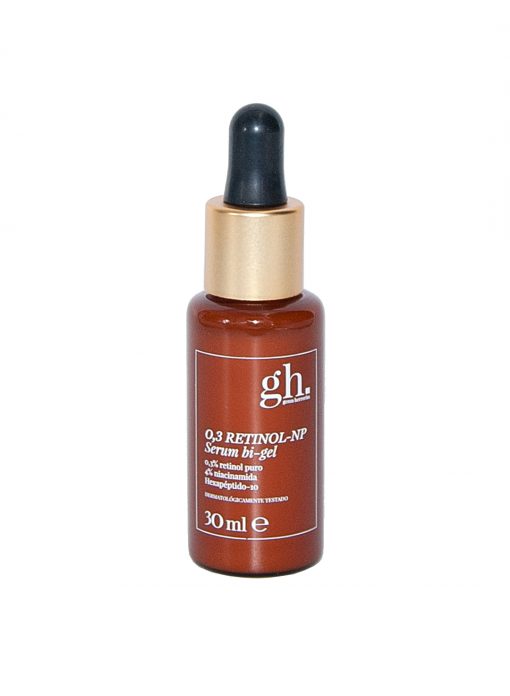
In short, in addition to cleansing and sun protection, hydration is a beauty essential; hyaluronic acid, vitamin C and retinol are the key cosmetic ingredients for keeping the skin radiant and hydrated and for delaying the signs of aging as much as possible.
Another day I'll tell you about cross-linked hyaluronic acids. It's a hyaluronic acid that, through certain bonds, forms a three-dimensional matrix, and it's the formula used in aesthetic medicine to reverse aging when cosmetic formulas fall short for us.
Taking care of yourself is a right and a duty; beyond vanity, we should feel good in our own skin. :P
If you liked it, leave us your comments.
Woman&Business. #beauty
Cargando comentarios...